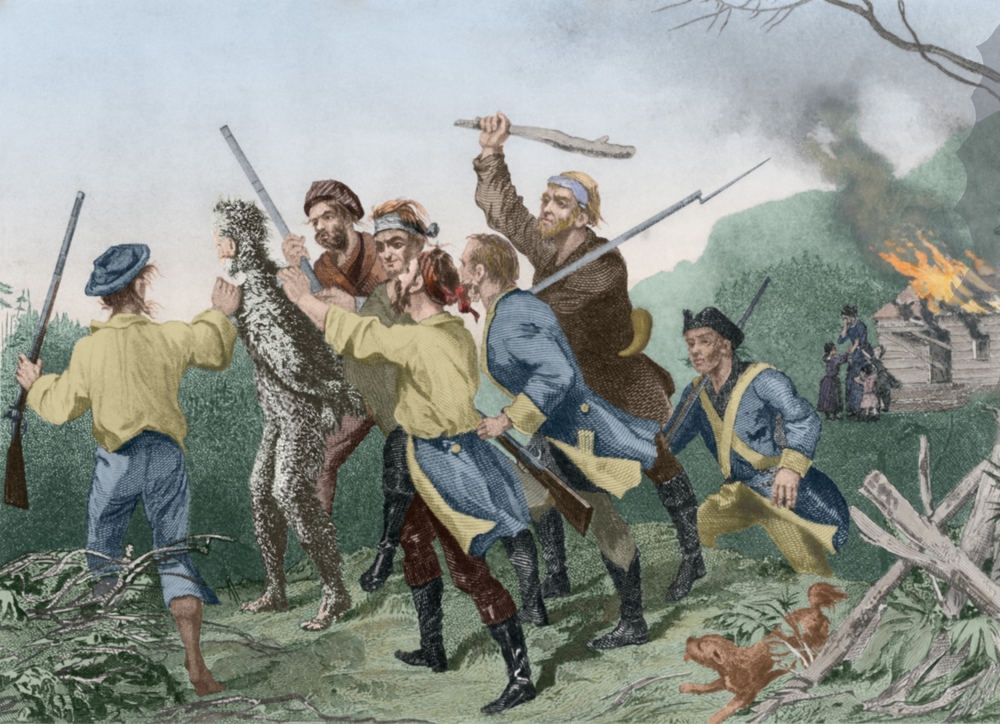
In history, feathering and tarring was a method used by mobs to punish or humiliate criminals or persons believed to have done something wrong in the community in some way. As the event is mostly recognized as being a punishment handed down in colonial times, the history of feathering and tarring stretches back all the way to the crusades and possibly further.
According to the King Richard’s degree, if any soldier was found stealing from his fellow soldiers, he was supposed to be shaved and then coated in boiling pitch before having a “cushion of feathers” poured over his head. The criminal would then be left stranded in whichever country they happened to anchor next while the explicit wording used by King Richard suggested that the punishment was not meant to be serious or fatal.
It is not at all difficult to see how pouring hot pitch over someone could prove deadly. The most common injuries from feathering and tarring itself were indeed burns and blisters. After the criminal was then thoroughly humiliated, perhaps by parading him around the town in a nude or semi-nude state. The person also used to find it very difficult to get the tar and feathers off the body without potentially losing a little skin in the process.
As feathering and tarring was a punishment that was often handed down by angry mobs, persons who were subjected to the punishment were sometimes severely beaten. For example, in 1832, Sidney Rigdon, a Mormon Minister and his friend were almost killed when a mob went their home and dragged them in the dead of night; severely beat them while trying to force-feed them acid before feathering and tarring. The mob left both of them for dead. Surprisingly, both men somehow survived the horrifying ordeal. Unfortunately, Smith’s baby, who was left exposed to the elements during the whole horrifying event, was not able to survive.
How did people survive the ordeal?
In most cases, feathering and tarring was simply meant to humiliate the person in question, not kill them. As such, pine tar was most commonly used, which has a very low melting point, typically around 140 degrees Fahrenheit. This temperature was certainly hot enough to cause enough pain and discomfort to the person.
So if the motive was to cause pain and death, boiling pitch or coal tar could be used along with severe beatings. But given the survival rate, it would appear this was rare what those administering the tar and feathers were going for. If the mob really wanted to kill the person, they had more convenient and less elaborate methods for that, like hanging.