It’s a big, beautiful world we live in and it’s filled with the tiniest of creatures. Among the most fascinating of the micro-world are insects. Small insects can be compact while quite complex. Here are some of the world’s smallest insects.
1. Western Pygmy Blue Butterfly
These tiny ornate winged creatures are actually among some of the most resilient. Butterflies are believed to have flown on the Earth for more than 200 million years. They survived in pre-historic times before plants were pollinating and lived through the mass extinction of the Ice Age.

The tiniest known butterfly is the pigmy blue butterfly. This blue beauty lives throughout North America, including Hawaii, and in the middle east. It has a wingspan of just 12 millimeters and can be recognized by the blue color and copper brown pattern along the bottom edges.
2. Patu Digua Spider
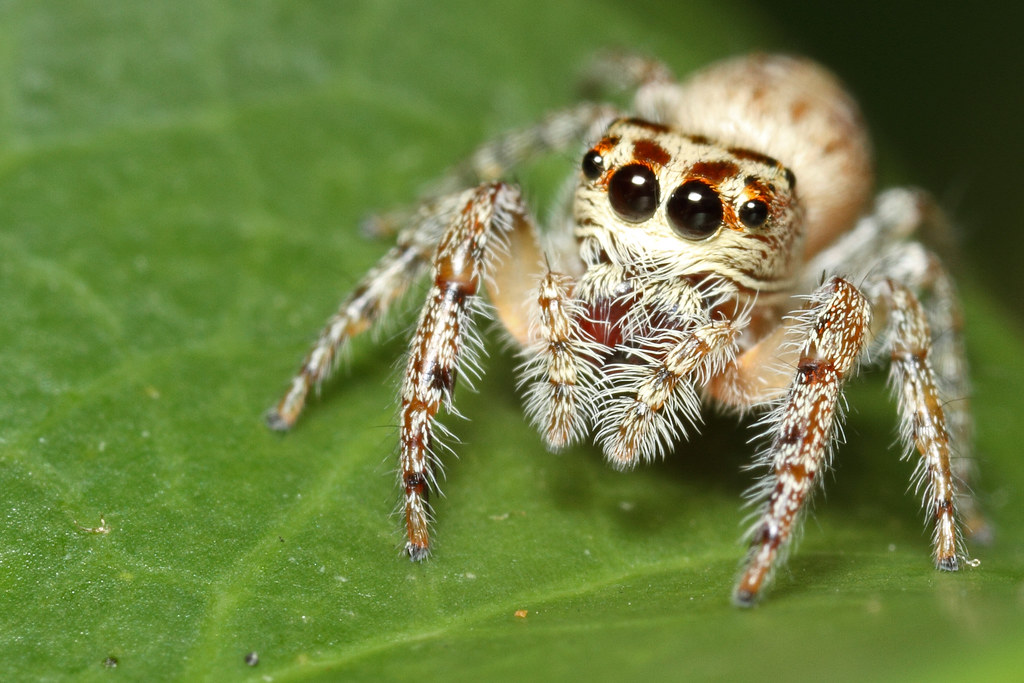
Arachnophobes beware. The tiniest known spider measures just a third of a millimeter long. That’s smaller than a head of a pin and invisible to the naked human eye. The Patu Digua Spider dwells in South America in the El Queremal, Valle del Cauca region of Colombia.

It is possible that the Patu Digua is not even the smallest spider living on Earth. Female Anapistula calculus of West Africa has been recorded as little as three-one-hundredths of an inch. Male spiders are generally smaller than the females and could be even tinier than the Patu Digga.
3. Scarlet Dwarf Dragonfly
Dragonflies are best known for being some of the largest insects on the planet. A dragonfly ancestor, the Meganeura, was a pre-historic flying monster with a wingspan of 70 centimeters. It lived as long as 300 million years ago in the Triassic period, as a strong predator of other smaller insects. Today, the Odanato dragon fly clocks in with a wingspan of 20 centimeters and a body length of 12 centimeters.

Dragonflies today come in a wide variety of sizes. The smallest is the Scarlet Dwarf Dragonfly’s wingspan is just three-quarters of an inch or 20 millimeters on average. Also known as the northern pigmy or the tiny dragonfly, this cutie is native to Southeast Asia with smaller populations in Australia.
4. Midget Moth
If you are ever trying to determine whether a tiny flying insect is a moth or a butterfly, it can be difficult. Generally, butterflies prefer the daytime and months swarm out at night but that isn’t a universal rule. Instead, look at the antenna of the insect. Butterflies have rounded balls at the end of their antenna and moths do not.
Already covering the smallest butterfly, the smallest moth is the pigmy or midget moths. An average wingspan of a moth is 25 millimeters across. The pygmy sorrel moth can be as tiny as 3 millimeters across.